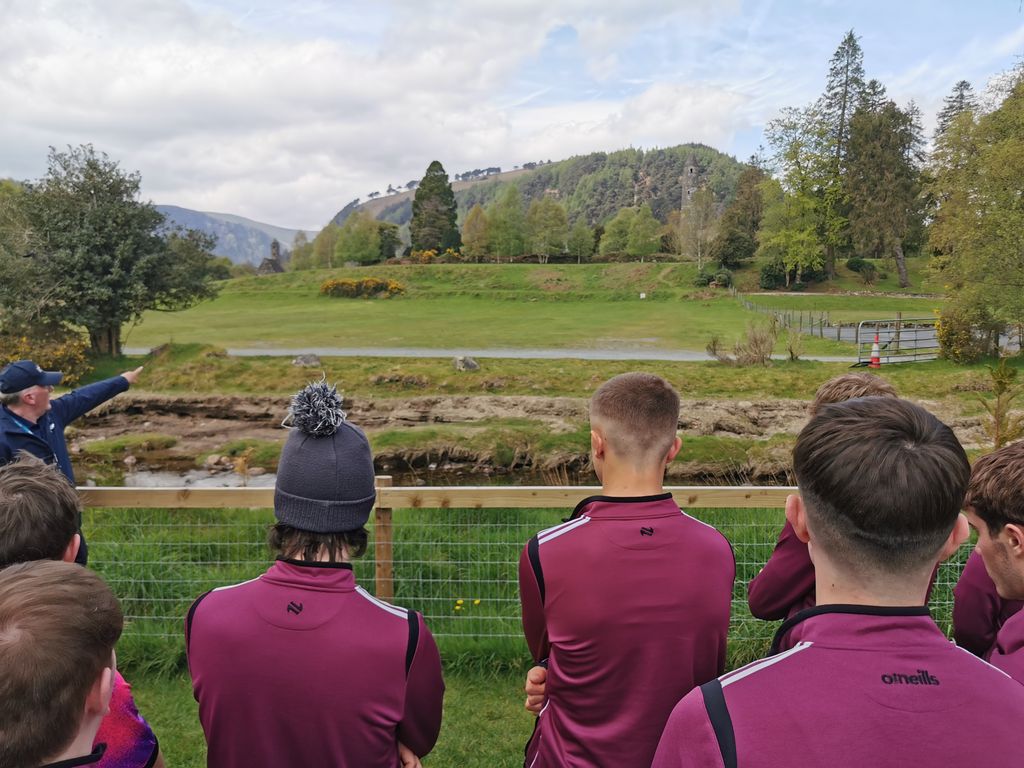
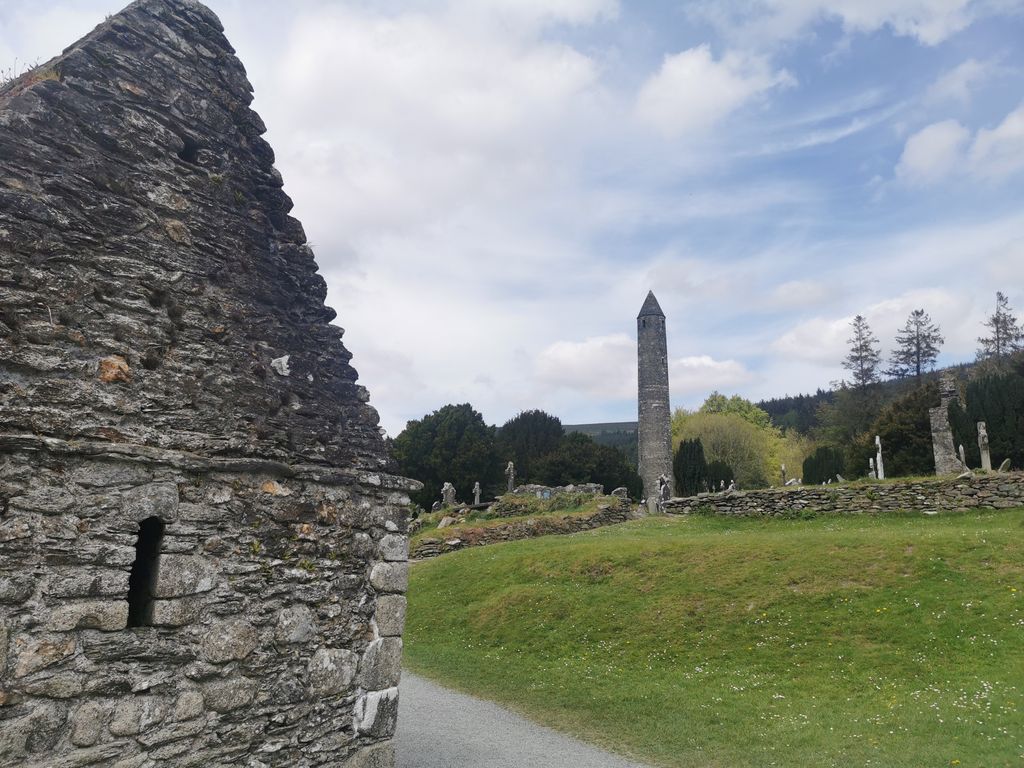
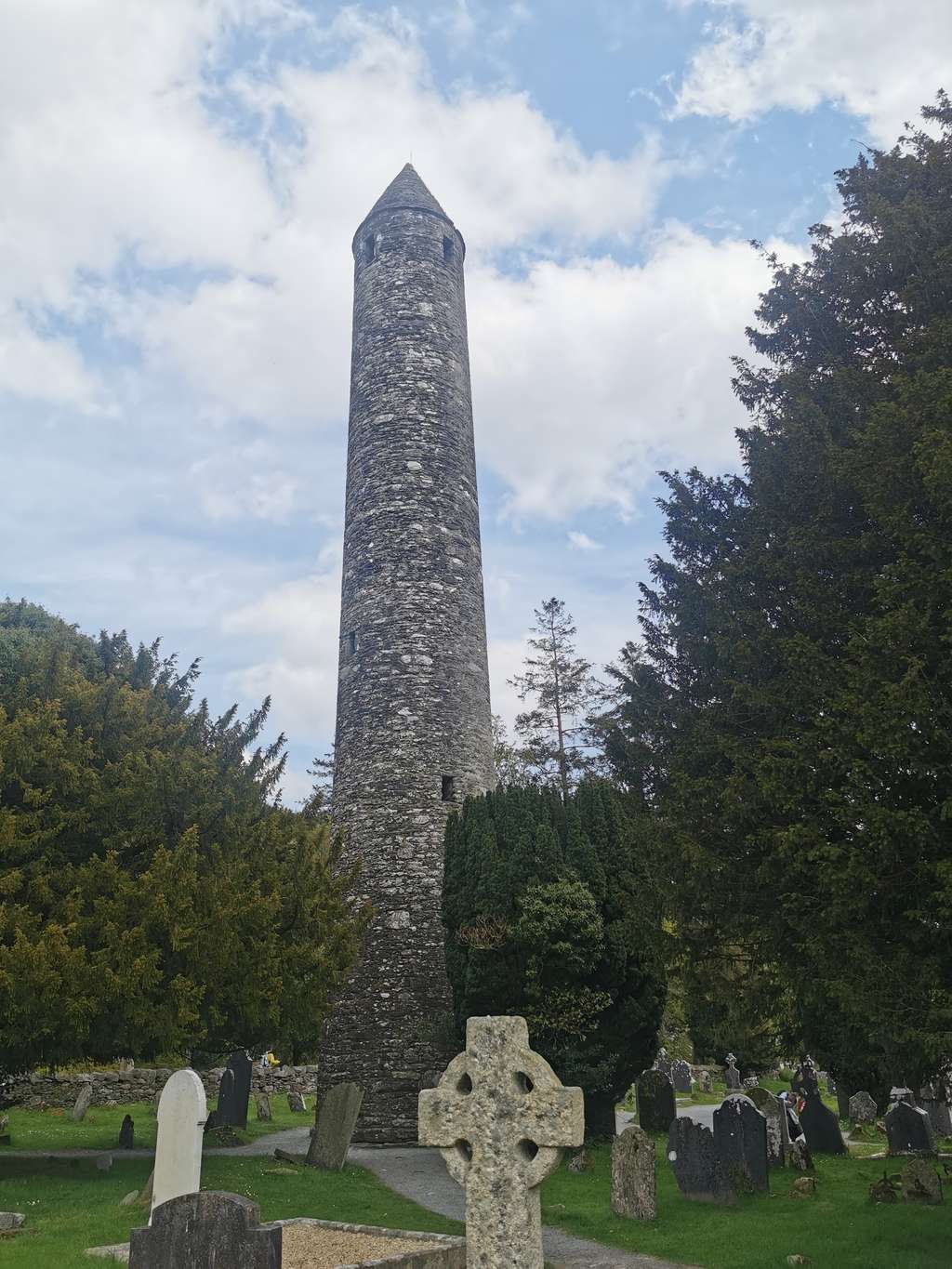
Our TY History students travelled to Glendalough, where they explored one of Ireland’s most important Early Christian sites. At the iconic Glendalough Round Tower, students learned how these structures served as bell towers, calling monks to prayer, while also offering refuge in times of danger. Standing at around 100 feet high, with its doorway raised nearly 12 feet above ground, the tower reflects both spiritual life and practical defence. Students were struck by the skill of early builders and by Glendalough’s role as a place of sanctuary and pilgrimage.
The trip then moved forward to the era of rebellion and resistance. Travelling along ‘Military Road’, students discovered how this route was constructed after the Irish Rebellion of 1798 to allow British forces to access remote mountain strongholds and pursue rebels such as Michael Dwyer.
At the Dwyer–McAllister Cottage, students engaged with one of the most dramatic local stories of the period. They learned how, on a winter night in 1799, Samuel McAllister made a heroic stand, drawing fire upon himself to allow Dwyer to escape.
Students were particularly interested to learn that Dwyer was never captured in battle. Instead, after years on the run, the authorities were forced to negotiate his surrender on agreed terms in 1803. Although promised passage to America, he was ultimately sent into exile in Australia, where his story took an unexpected turn. There, he became a respected figure in law enforcement, rising to the role of Chief Constable in Liverpool, near Sydney.
This visit brought together themes of faith, survival and resistance, helping students to see how the landscapes of Wicklow hold stories that connect Early Christian Ireland with the struggle for independence, and how one life story can move from rebellion to responsibility across the wider world.



 App
App